The leather industry engages with the European Parliament
Leather should be excluded from the scope of the EU Regulation on deforestation-free products (EUDR)
At the initiative of Dario Nardella, the discussion brought together the European leather industry in Brussels on 8 April, with the support of delegates from embassies and missions to the EU, including Canada, the United States, Sweden, India, Australia, Vietnam, Japan and Brazil, alongside representatives of the European Commission, including Luis Planas Herrera, member of the Cabinet of Commissioner Jessika Roswall, Members of the European Parliament such as Maria Grapini (S&D, Romania) and Francesco Torselli (ECR, Italy), as well as scientists, notably Luca Marrucci, PhD (University of Pisa), tanners and NGOs. The event provided an important opportunity for direct engagement with the European Commission, which is currently preparing the EUDR Delegated Act that will revise the products covered by the Regulation, expected by the end of April. The discussion clarified the situation: leather processing is not a cause of deforestation, has never been so, and its inclusion within the scope of the EU Deforestation Regulation (EUDR) occurred without an adequate impact assessment.
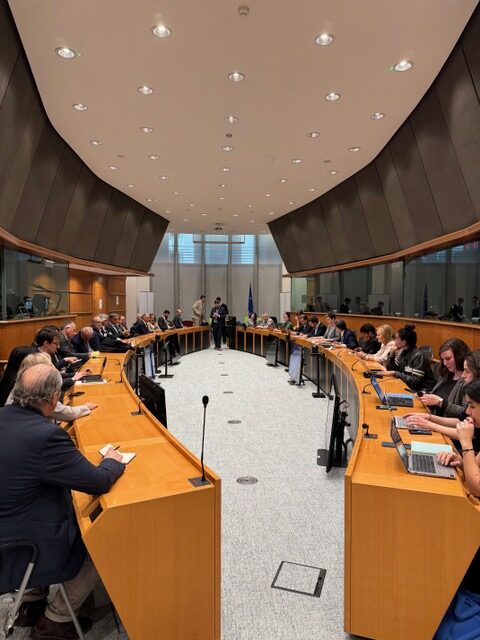
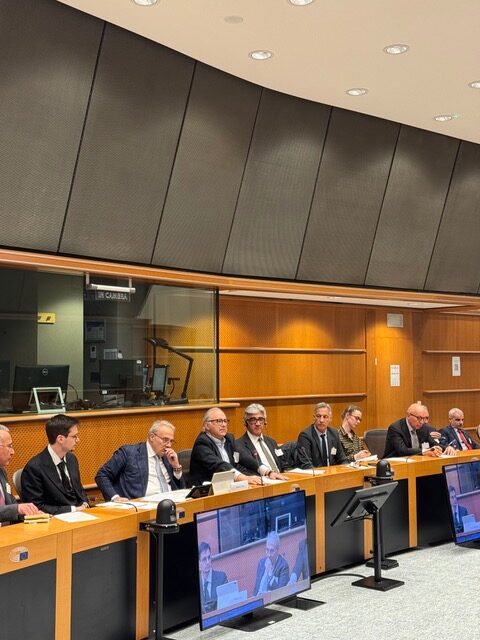
From research, including studies by the Sant’Anna School of Advanced Studies in Pisa, to evidence from the sector at a global level, the key concerns emerged clearly: farmers have no interest in implementing the EUDR based on raw hide sales, which account for only around 1.4% of the economic value of a bovine carcass; the risk of excluding a European industrial sector from global value chains, effectively shifting production outside the EU; and the potential generation of millions of tonnes of waste if hides are no longer processed into leather. This is therefore not merely a regulatory compromise but a matter of science, consistency and common sense. The meeting also brought a note of optimism for the tanning sector. Luis Planas Herrera, member of the Cabinet of Commissioner Jessika Roswall, indicated that the forthcoming adjustments to the scope of the Regulation aim to preserve the industrial competitiveness of key sectors and ensure that the requirements and investments expected from industry remain proportionate, realistic and meaningful. “For Tuscany, this sector means jobs, families and communities. I am here in Brussels to defend it. Leather and hides must be excluded from Annex I of the EU Deforestation Regulation. Not because we oppose forest protection, but because good legislation must target those truly responsible for deforestation, not those who transform waste into a circular and durable material. The Delegated Act will arrive in the coming weeks. I wanted to initiate this discussion now, with the Commission at the table, because the decision is being taken right now. Italy and Tuscany must make their voices heard,” stated Dario Nardella, Member of the European Parliament for the Socialists and Democrats.
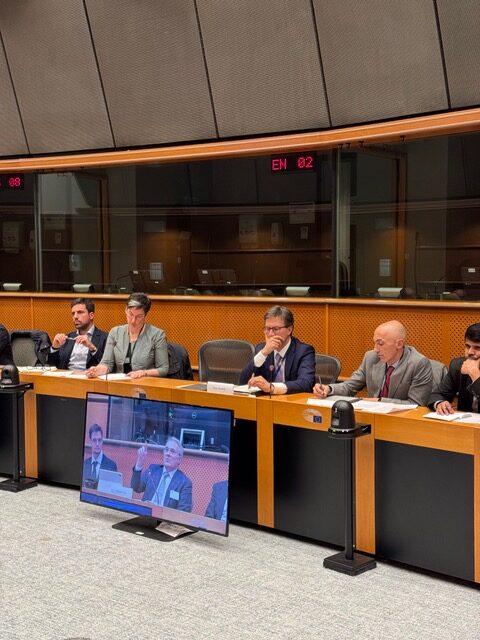
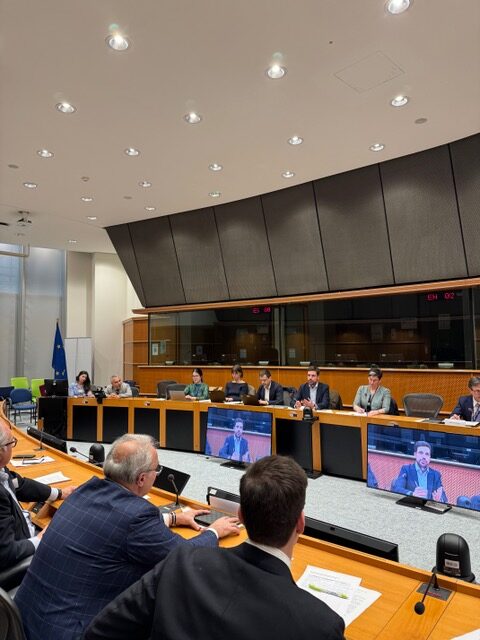
“We have been explaining this for years: leather is not a cause of deforestation. The science is clear, as demonstrated by the results from Pisa and many other studies. If implemented in its current form, the EU Deforestation Regulation will not change the situation regarding deforestation, but will force European tanneries to close, shift production elsewhere and accelerate consolidation, where only large operators will survive. In the end, we risk losing SMEs, distorting markets and exporting both production and impact outside Europe, without solving the problem.” “The Regulation is intended to address this issue,” said Fabrizio Nuti, President of UNIC – Italian Tanneries. “The requirements of the EU Deforestation Regulation (EUDR) are simply too burdensome. It will not be economically viable for some exporters, who may stop exporting to the EU if their products are subject to the Regulation. They will find other markets,” stated Callie Stewart of the Mission of Canada to the EU. The conclusion is clear: evidence must prevail. The forthcoming Delegated Act will be decisive. It is time to adopt policies based on concrete data. COTANCE will continue to work with EU institutions and international partners to ensure that the regulatory framework reflects the reality of global value chains and supports evidence-based decision-making.